Project Start: Unnamed Toy Theatre Decker Prototype
It's perhaps the coldest day that I've yet experienced in Toronto, but at the moment I'm bundled up inside, watching a cat thoroughly enjoy our space heater, and working out some of the language I'd like to use in describing a new project I'm working on. (This is the project, these are those words.)
In the fiveish years that I've been making little videogames with intentionally constrained game tools and engines, my general rule of thumb has been to use the making of a game as a means to also learn the tools/workflows/programming associated with an engine. CentoQuest taught me the basics of Twine (and, more generally, the pleasures and intricacies inherent of born-digital literature at any level). The Last Best Western in Ohio introduced me to the basic building blocks of Bitsy, while Capsules and A look of glass stops you were opportunities for trying out numerous Bitsy hacks, failing, rolling up my sleeves, and trying again. Correspondence was a fun intro into the charmingly idiosyncratic and logically impressive PuzzleScript. Most recently, my dumb HobNob Pocket served as baby steps into a more programming-centered development process on the PICO-8 (and, by extension, some norms of the Lua programming language).
As a slight outlier, I also built a strange digital prototype of a 19th-century-style toy theatre in Godot: Bartholomew Fair: A Point-and-Click Edition. Considering the open-ended nature of Godot compared to the above engines, at the time this felt like an overly ambitious jump. And it certainly was at times! I immediately reckoned with the complexities of even the simplest nodes of game design, such as incorporating appropriately formatted external assets or, like, even getting words to appear on the screen at the right time. And so, even here, I leaned heavily on another constrained tool, the excellent Popochiu plugin for Godot, which scaffolds much of the essential infrastructure of a point-and-click game.
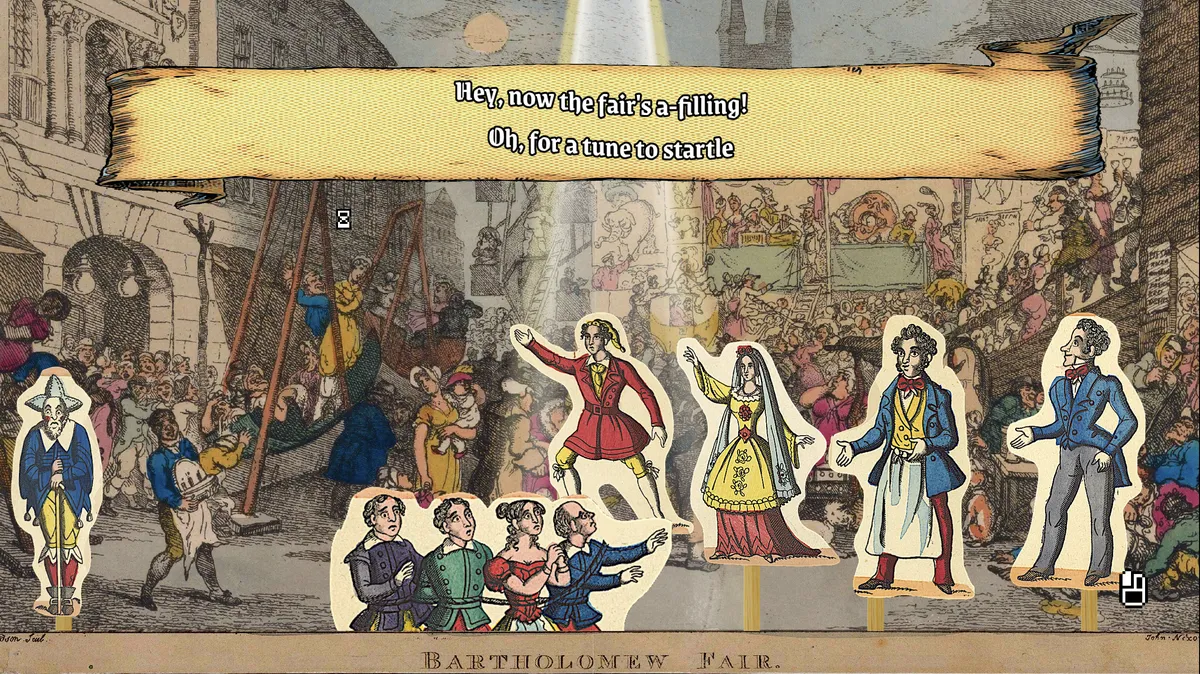
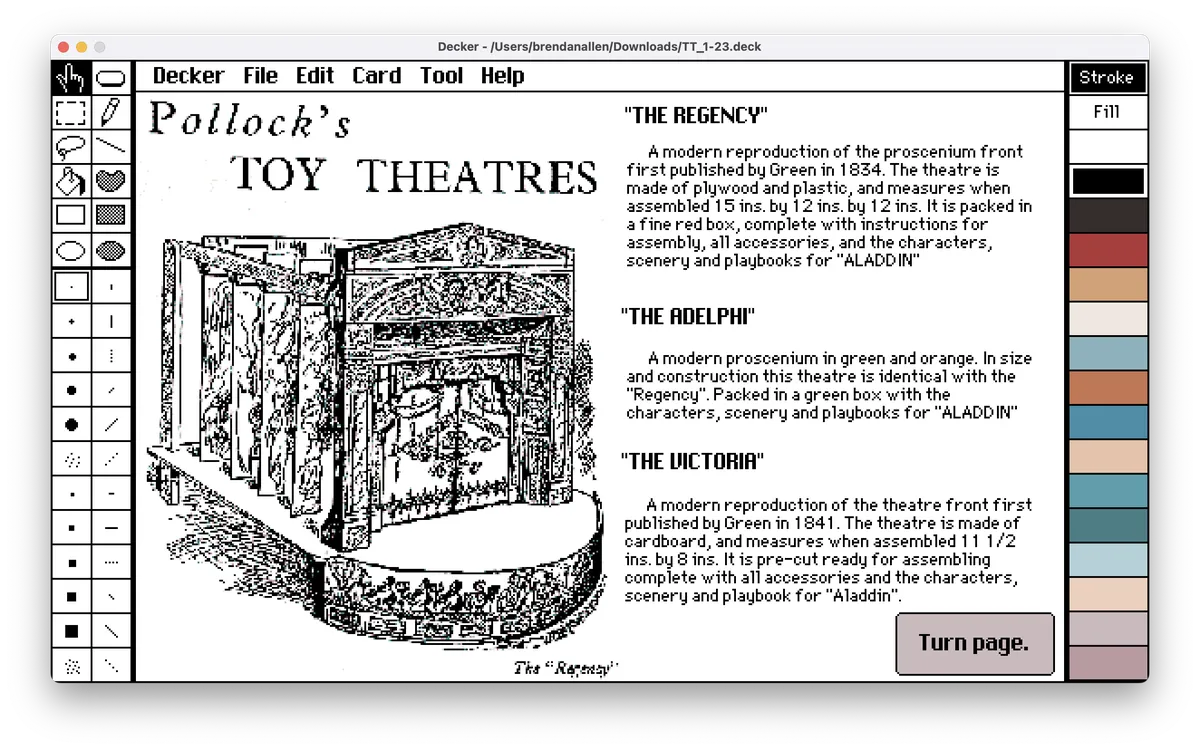
The resulting piece was a challenging pleasure to make, and made for a fun demo table at a few university events. But it also felt that there was something essential missing. After all, the pleasures of those assembling a toy theatre are just as present (if not more so) than the eventual audience -- selecting characters and sets, coloring them, cutting them out, and assembling it all into a cohesive miniature production before opening night. For example, here's some charming instructions from an old set Penguin set and a catalogue excerpt from Pollock's Toy Theatres.
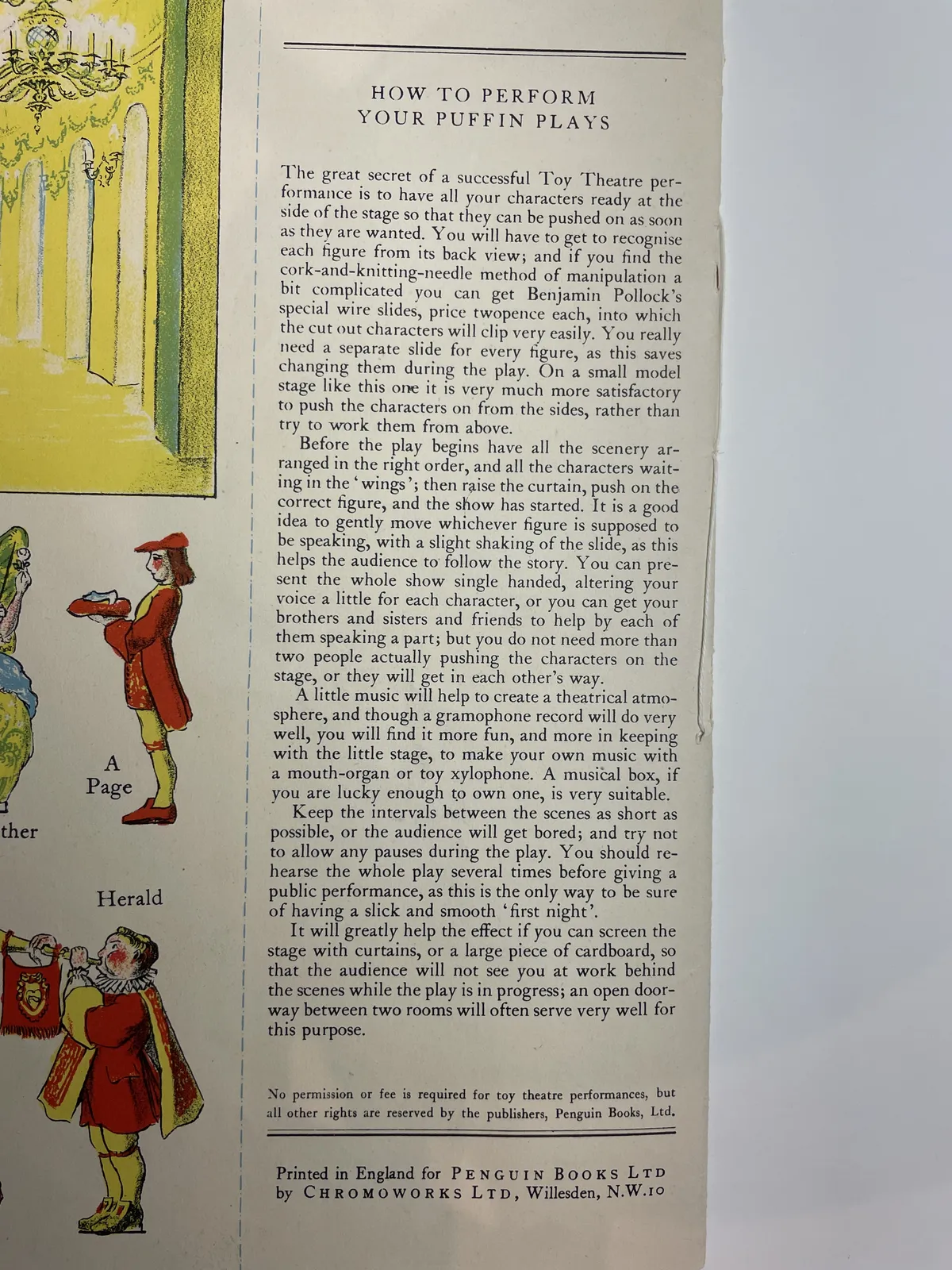
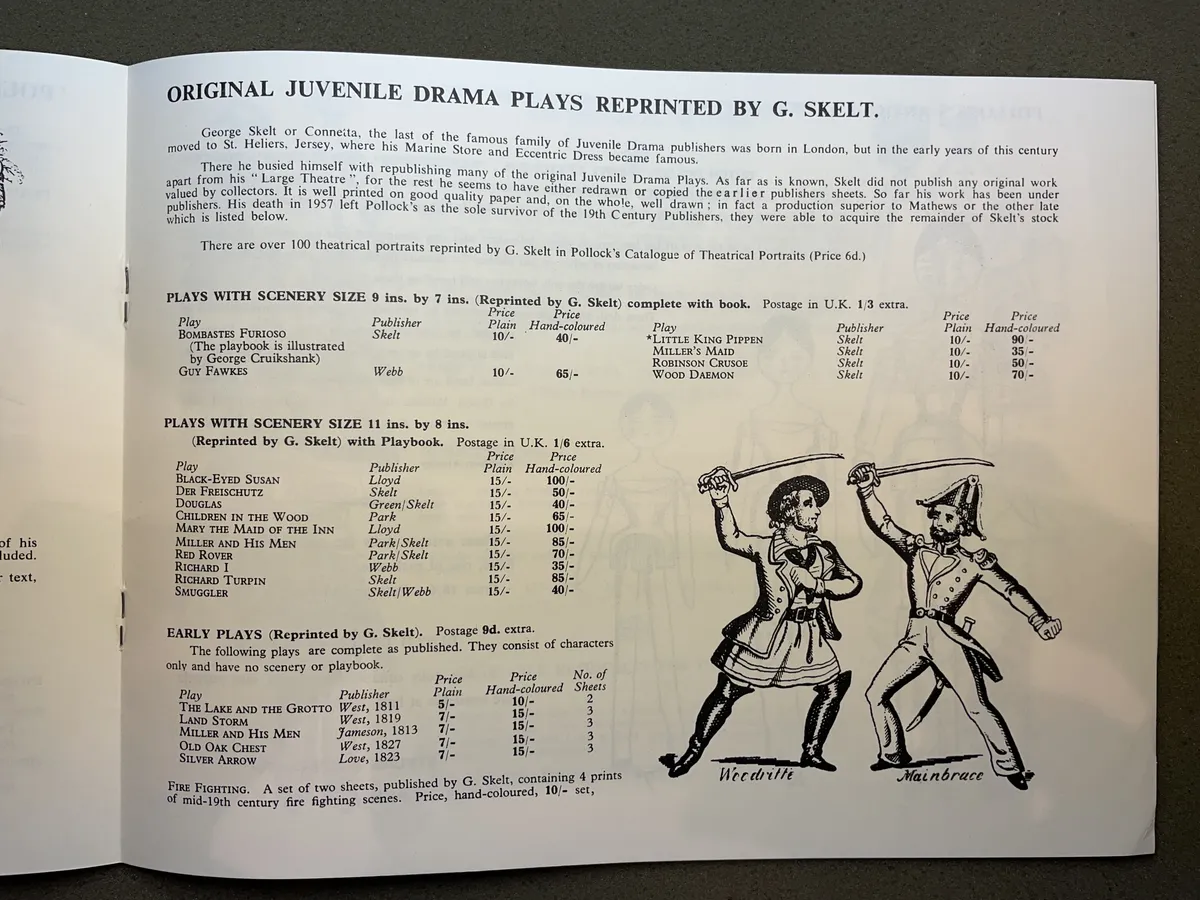
In retrospect, the Bartholomew Fair project felt a bit like gifting someone a LEGO set but assembling the whole thing beforehand. Sure, you've given someone a neat rocket ship, but they probably wanted to build it too...
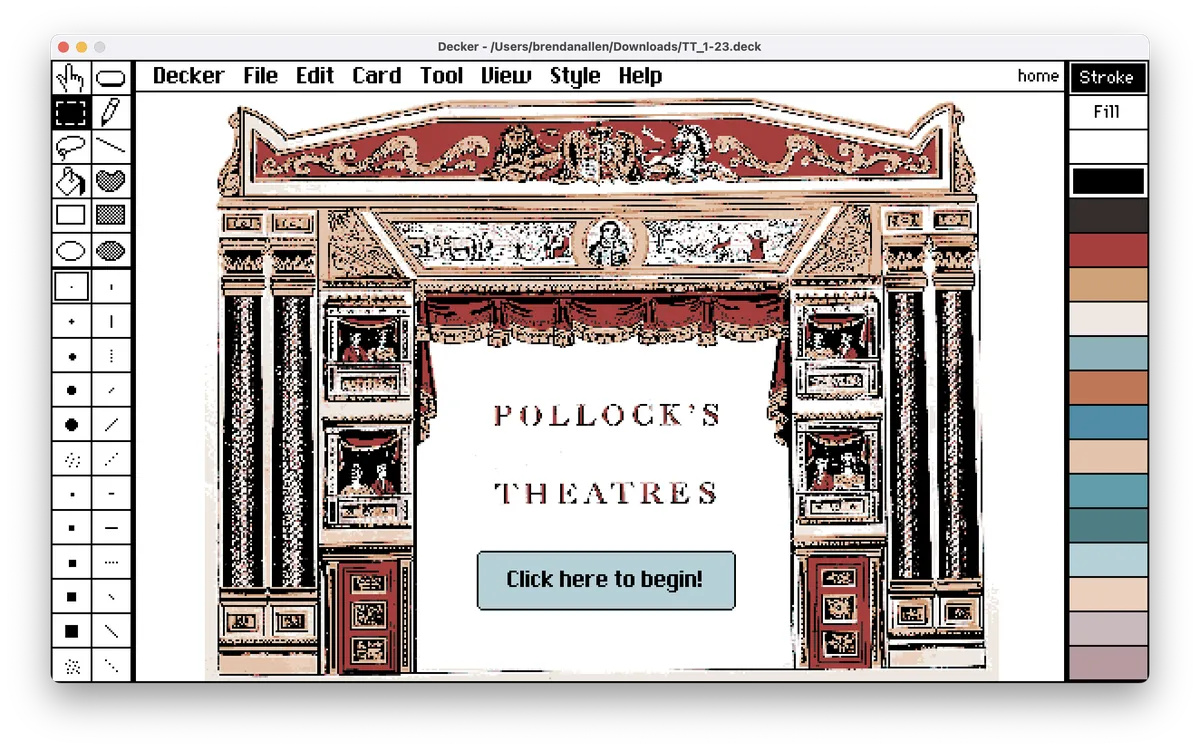
So: all of this as a long preamble to my newest project. I'm revisiting the toy theatre conceit from a different angle -- and, of course, continuing the trend of teaching myself a new little tool while I do it. Using the Hypercard-inspired Decker tool, I'll be building a prototype of an interactive toy theater catalogue. The goal is to build something that offers players the chance to pick out their own little characters, choose their own little sets, and, eventually, assemble their own little snapshot of a toy theatre scene. And, extending from the Bartholomew Fair project, I'll also be digitizing some old toy theatre catalogues and sets held by the Thomas Fisher Rare Book Library at the University of Toronto. The Fisher has some truly fun toy theatre materials squirreled away in its stacks, and the website for Elizabeth Ridolfo's 2023 exhibition, A World of Fancies: The Toy Theatre and the Living Image, offers a great look at the kinds of pieces I'm talking about here.
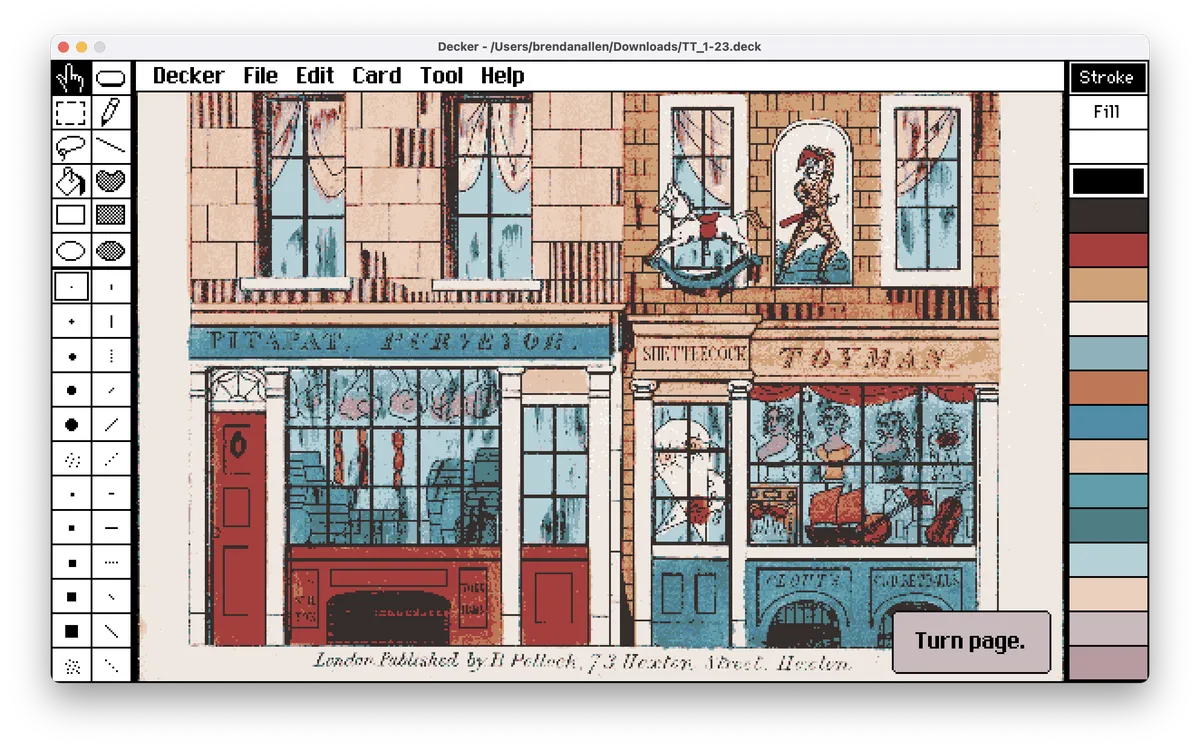
Right now, I'm still very much in the assembling-my-tools and clearing-my-throat stage of the whole thing. But I've done some quick Decker mockups using some old phone photos from my trip to the Fisher last year (which also taught me a fair bit about importing images and Decker's color palette settings). Here's a few glimpses so far:
And finally, a short self-reflexive note about this blog. To put it bluntly, I'm very, very lazy at self-documentation. But I'd like to get better. I've been long inspired by Pippin Barr's direct approach to process documentation. These posts are in many ways a means of trying out his documentation strategies and seeing if they work for me. Let's see if I can keep it up for more than a few posts.